The main objective of modern laying hen production is to increase the production period to achieve an average of 500 eggs per 100 weeks, which requires research to improve the quality of the eggshell. The eggshell plays a vital role in mechanical protection and provides a suitable environment for the development of the embryo.
The shell is mainly composed of calcium carbonate and other minerals. Calcium (Ca) is required as an essential element in the diet for eggshell formation and is added to the diet of laying hens. However, hens have a cyclic reproductive physiology that results in different nutritional requirements throughout the day.
In the morning, higher levels of protein and energy in the diet are required to support yolk and albumin formation, while in the afternoon and evening, increased calcium intake is necessary for the development of the eggshell and membrane. Traditional feeding systems that provide a fixed diet throughout the day may lead to nutrient imbalances, resulting in excess calcium intake in the morning and excess protein and energy in the afternoon.
To address this problem, a split feeding strategy has been proposed. This approach involves providing a high-protein, high-energy, low-calcium diet in the morning, followed by a low-protein, low-energy, high-calcium diet in the afternoon or evening. By synchronizing nutrient supply with the metabolic needs of the hen, split feeding optimizes nutrient utilization, improves feed efficiency, and increases eggshell quality, while reducing unnecessary nutrient excretion.
Given the growing interest in optimizing laying hen nutrition and improving production efficiency, this study provides a comprehensive review of the available data on split feeding strategies and highlights their impact on nutrient utilization, eggshell quality, and overall laying performance.
Introduction
Common feeding practices for laying hens typically involve providing a complete diet with free access to feed (Hwang et al., 2025). The diet is generally provided in the form of pellets or crushed feed, which results in the regulation of feed intake by the hens mainly based on energy requirements and the form of feed presentation. In advanced poultry farming methods, hens are unable to regulate their intake according to physiological needs and production requirements. This situation often leads to excessive consumption of nutrients such as calcium, which plays a pivotal role in eggshell formation (Molnar et al., 2018).
The ultimate goal of egg production in hens is to achieve specific productivity goals, such as extending the production cycle to reach an average of 500 eggs per 100 weeks. To achieve this goal, it is essential to conduct studies and research focused on improving eggshell quality (Galea et al., 2015). The eggshell performs a vital function, providing mechanical protection against damage and creating a suitable environment for gas exchange during embryo development. In addition, the shell acts as a distinctive “packaging” for eggs used by humans.
Eggshell, which is mainly composed (about 97%) of calcium carbonate, contains calcium as a critical mineral in the shell formation process, which is included in the diet of laying hens. As explained by Hunton (2005), in the digestive system of the hen, ionized calcium is absorbed and then incorporated into the shell-forming gland. This process leads to a significant turnover of calcium in the bloodstream, which can occur up to 100 times in a 24-hour period.
Research findings indicate that birds generally have the ability to select their food to meet their growth and maintenance needs (Barclay et al., 2004; Cruz et al., 2005; Henok and Dingle, 2002; Keshavarz, 1998a; Leeson and Summers, 1978; Sifwan et al., 2012). Free-choice feeding systems allow birds to select their food based on their maintenance or production needs, thus offering advantages over traditional feeding methods (Oliveira, 1999).
The effort to tailor diets to the optimal needs of chickens has been an ongoing pursuit, with the aim of increasing productivity and product quality, along with investigating the feeding behavior of these creatures (Clark et al., 2019). The concept of segmented feeding revolves around providing different types of feed throughout the day, which adapts the diet to the metabolic needs of the chicken at different times of the day, mainly to improve eggshell quality.
By administering specific amounts of calcium at different intervals throughout the day, the diet is more closely aligned with the hen’s needs throughout the diurnal cycle and takes into account metabolic fluctuations. This approach helps to reduce bone utilization and continuously improve eggshell quality throughout the production phase (Dake et al., 1993), especially for hens approaching the end of their laying period (Galea, 2015). This review examines the physiological basis and practical consequences of segmented feeding in laying hens, with a particular focus on dietary calcium intake and its impact on eggshell quality.
Egg development and feeding behavior of laying hens
Hens can lay an egg every 24–26 hours, due to the presence of multiple follicles in their ovaries. These follicles in the reproductive stage exhibit a range of sizes, organized by their quality, from small and immature to large and capable of ovulating (Rutz et al., 2005). The specific follicle that ovulates is known as the yolk sac.
After the rupture of the follicular membrane, the yolk sac exits the ovary and slowly settles into the infundibulum, which is the starting point of the oviduct. Yolk development is a continuous process that
It occurs during the day and usually begins about six days before ovulation. The progression of yolk formation passes through several stages that are limited by the length of time the ovum remains in the uterus.
A notable limitation in hens is their inability to significantly increase shell thickness relative to egg size, which may be related to calcium metabolism (Chah and Moran, 1985). Studies have shown that hens receiving calcium supplementation tend to select these components during the eggshell formation phase, thereby improving shell quality.
Calcium levels for laying hens are usually assessed by analyzing the calcium content of the shell and then calculating daily intake based on the maintenance rate, which is usually between 60 and 70% (2000). Waldroup and Hellwin found that hens receiving calcium separately from other ingredients showed fluctuations in intake levels throughout the day, a pattern that is regulated by the process of shell formation.
Calcium absorption in hens occurs in the duodenum and jejunum of the digestive tract and is then transported to the vascular system, which acts as both a carrier and a reservoir for calcium. It is worth noting that not all calcium is absorbed and some is excreted. In the context of eggshell formation, calcium is supplied from dietary sources consumed during the day, mainly at the end of the photoperiod (light period) (Etches, 1987).
The oviduct magnum is responsible for albumin production and is continuously active throughout the day. The proteins produced by the tubular glands are then released and adhere to the ovum as it passes through the magnum. After this stage, the process of protein storage begins until the next oviposition cycle (Edwards et al., 1976).
Researchers such as Hiramoto et al. (1990) have emphasized that both the oviduct and the liver in laying hens play a central role in protein synthesis to a greater extent than any other tissue analyzed. Due to the rapid process of albumin formation, protein synthesis in tissues such as the oviduct may vary throughout the day. In contrast, hepatic protein synthesis remains constant regardless of the stage of egg formation.
In Figure 1, the different stages of egg formation are depicted, with particular emphasis on feeding behavior related to calcium intake. There is a significant difference in intake at different times of the day, with the lowest calcium requirements in the morning and a significant increase in demand starting at 4 p.m. This pattern of intake was confirmed by Mongin and Sauer (1974), who observed a significant increase in calcium intake between 4 p.m. and 8 p.m. when hens were given additional calcium from shellfish to their diet. Cha and Moran (1985) further confirmed this behavior and showed that when laying hens had a choice of calcium sources, they showed specific patterns of intake, usually in lower amounts.

Figure 2. Calcium, energy and protein intake by laying hens at different times of the day (Rick and Laura, 2022).
The graph clearly shows that in the morning, with a single feed, there is an excess of calcium available that cannot meet the higher requirements of the hens during the day.
It is widely accepted in the scientific community that the feeding behavior of laying hens is significantly influenced by the egg-laying process (Choi et al., 2004). Observations have shown that feed consumption is higher on days when eggs are being laid than on days when they are not (Morris and Taylor, 1967). Taylor (1970) believes that feed consumption during egg-laying is mainly influenced by calcium requirements, not energy requirements. Furthermore, Hughes (1972) has noted that calcium intake is regulated hourly based on egg-laying requirements. Laying hens tend to consume about 2% more feed on days when they are laying than on days when they are not laying, as noted by Rowland et al. (1972). According to Duncan and Hughes (1975), hens have the ability to self-regulate their feed intake, with feed intake decreasing during the luteinizing hormone release period and increasing during the laying period.
The amino acid requirements of laying hens remain constant throughout the day, but these requirements can be influenced by the laying process. Squibb (1966) emphasized that amino acids essential for protein synthesis in the egg and eggshell membranes cause a significant release of free amino acids into the bloodstream, which occurs in the first five hours after laying. Furthermore, Grigoriev and Shevenko (1978) suggested that at different times of the day, the rate of amino acid absorption by the zona magnum of the oviduct undergoes fluctuations, which are associated with different rates of protein synthesis in this particular section.
Feeding Laying Hens: Major Effects on Production and Nutrition
It is widely accepted that hens have a remarkable ability to selectively consume feed particles, such as corn kernels, protein concentrates and even limestone particles, to meet their daily nutritional requirements. Consequently, Robinson (1985) proposed a feeding system for hens called “bulk feeding”, in which a fixed diet is provided throughout the day. The diet consists mainly of starch-rich grains, protein concentrates and granulated limestone, which therefore includes a wide range of particle sizes.
By implementing this strategy,
It provides a location for the simultaneous distribution of essential nutrients in a single diet, allowing for the separation of grains and fine-tuning of the intake of each component of the diet. In addition to this approach, sequential feeding is another method in which two distinct diets are provided throughout the day. These diets differ in terms of energy content, protein composition, and calcium levels. The aim of this technique is to ensure that specific nutrients are available at strategic times in the eggshell formation process (Umar Farooq et al., 2010).
Laying hens can be raised using a variety of feeding systems, which vary depending on the breeder’s expertise, the rearing system used, and the types of feed sources and distribution methods used. These systems may include providing complete dry diets to hens ad libitum, providing pellets or kibble to hens ad libitum, incorporating whole grains into complete diets, providing limited amounts of complete diets, or allowing hens to roam freely on pasture (Enoch and Dingle, 2002).
In laying hen farming, complete diets remain the dominant option due to their ease of management within the chosen rearing system. Although other strategies such as kibble have advantages, particularly in terms of diet uniformity, they can be more expensive due to the higher costs associated with grinding, mixing, and the labor required to prepare them (Enoch and Dingle, 2002).
Significant genetic advances in laying hens have led to changes in various physiological aspects, particularly in relation to uniformity. Consequently, ensuring adequate nutrition, combined with good health, welfare and management practices, is essential for hens to fully express their genetic production potential. A large part of the nutritional requirements are related to the production responses of laying hens, which are influenced by factors such as immunity, health, age and nutrient interactions. These factors can affect digestion and compromise hen performance (Araujo et al., 2014; Baiao and Lucio, 2005).
To determine the daily metabolic energy requirements of laying hens, several variables have been considered, including body weight, weight gain, egg mass production and production environment temperature, with temperature being considered a key factor in the hens’ nutritional process (Rastagno et al., 2017).
During peak production, hens typically consume more feed energy; However, they are able to regulate their energy requirements by changing their intake (Leeson and Summers, 2005). In general, the level of nutrients in the diet decreases over time, except for calcium, because its availability does not decrease to meet the requirements for eggshell quality.
Therefore, there is an increasing focus on identifying management and nutritional strategies that can increase the productive lifespan of laying hens. Some researchers have proposed forced moulting as a method to restore the reproductive system and increase production in subsequent laying cycles (Park et al., 2004). However, Parra-Silva-Mendonça et al. (2015) argue that forced moulting based on starvation is a stressful procedure that raises serious ethical concerns about animal welfare. In line with these concerns, current international welfare guidelines—such as EU Directive 98/58/EC—imply prohibit forced molting methods involving severe feed restriction and prolonged periods of darkness, which are detrimental to animal welfare (Eurogroup for Animals, 2022). As an alternative, non-starvation molting protocols have been proposed to improve production efficiency while still meeting animal welfare standards (Lee et al., 2023).
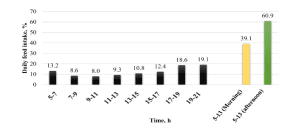
Figure 3. Feed intake of laying hens during the feeding cycle (Farmer, 1998).
High levels of calcium in the diet of laying hens can inhibit their feed intake (Horowitz et al., 1969). Conversely, calcium deficiency can lead to reduced feed intake (Rollance, 1973; Barr, 2009). Hughes (1972) showed that laying hens consume calcium based on their physiological reserves and are able to predict future deficiency of this mineral by detecting hormonal changes in their blood.
In a study by Chah (1972), hens of similar age and under the same conditions were divided into two separate groups. On the one hand, one group of hens had access to a single feeder, while the other group had access to three different feeders. These feeders contained different types of feed; one rich in energy, another in protein, and a third in calcium. The results of the study showed differences in the behavioral patterns of the hens as well as differences in their nutrient and energy consumption (see Figure 2).
Analyzing Figure 2, we see that hens display different feeding behaviors throughout the day, with peak energy consumption occurring in the early morning hours. This morning energy requirement is not met by a single diet, which causes the hens to consume more feed in the afternoon to meet their calcium requirements. Therefore, protein intake also increases in the afternoon, as the morning supply was not sufficient. A comparison between the single diet and free feeding shows a significant difference in calcium intake, with the peak intake in the late afternoon when the single diet is offered. Given the option
Choice, hens have been shown to be able to self-regulate, consuming less overall nutrients and optimizing egg production.
Understanding foraging behavior in avian species goes beyond mere physiological investigation. As Keshavarz (1998a) has noted in his controlled experiment, a tendency to consume feed later in the day has been observed, confirmed by an increase in the proportion consumed during this period (Figure 3). The changes in feed intake by laying hens throughout the daily cycle indicate the need for a more precise and flexible diet. A single feeding program is not sufficient to respond to fluctuations in nutritional needs and can thus negatively affect the production and welfare of the hens.
Self-selected feed selection
Enoch and Dingle (2002) evaluated a free-choice technique for laying hens that allowed them to choose between three main types of feed. The results showed that the performance of the hens was improved and feeding costs were reduced. It can be concluded that when chickens are given a choice, they can consume the most appropriate feed according to their physiological state and production level. However, it is important to note that the nature and method of food presentation can have a significant impact on the consumption patterns of laying hens.
In nature, birds usually have a wide variety of food to make up their diet. In this context, domestic birds can choose foods that are nutritionally beneficial to them. Modern domestic birds have the ability to adjust their feeding behavior in the natural environment to meet the basic needs of growth, production and reproduction (Cruz et al., 2005; Hank and Dingle, 2002).
In situations where choice is possible, birds can adjust their consumption of different types of food. Visual stimulation is very important in this process and food preferences are easily identified (Fraser and Broome, 1997).
Studies have shown that laying hens have superior visual abilities compared to pigs and therefore rely heavily on their vision to search for food, which again emphasizes that particle size is fundamental in the feeding process of birds (Enoch and Dingle, 2002).
After examining the practical and economic benefits of self-selection for chickens, Enoch and Dingle (2002) emphasized that birds can choose their diet from a variety of foods and thus meet their nutritional needs. Furthermore, the same authors emphasized that self-selection eliminates the need for mixing food, leading to energy savings. They also believed that complete and mixed diets are not necessary, which also saves on the purchase of expensive foods and allows the use of regional foods.
Split feeding
This method, which is commonly used in various laying hen production systems, has been shown to indicate that providing a single diet may not be the optimal nutritional strategy for egg production (Keshavarz, 1998). An alternative approach, called “split feeding”, involves dividing the feeding regimen into two different diets for the morning and afternoon. The composition of the morning diet is specifically designed to meet the nutritional needs of the early stages of egg formation, with particular emphasis on energy and protein (Jahan et al., 2024). In contrast, the afternoon diet is designed to support eggshell formation, particularly with regard to calcium. According to Molnar et al. (2018b), the main goal of split feeding is to improve egg quality by strategically adjusting nutrient levels, especially calcium and phosphorus, between the morning and afternoon diets. This feeding strategy allows for optimal utilization of nutrients, as they are supplied at the times when they are most needed for egg formation, thus potentially reducing the overall requirement for amino acids, calcium and phosphorus.
In conventional farming practices, hens receive the same diet throughout the day, resulting in a constant calcium intake. However, this may not be the most efficient approach, as calcium requirements vary at different times of the day (Huang et al., 2025). Providing calcium at inappropriate times can lead to nutrient losses in the feed of laying hens (Molnar et al., 2018).
During the early stages of egg formation, which include egg laying and albumen formation and occurs in the first 5–6 hours, calcium requirements account for approximately 40% of the available calcium. As the shell formation process progresses, this requirement increases to 70–80% (Horowitz and Barr, 1965).
Molnar et al. (2018b) emphasize the necessity of implementing a new feeding system for production and laying hens throughout their production life to optimize feed efficiency. The split feeding method involves providing different nutrients at specific times of the day, in the morning and afternoon, with the main aim of maintaining eggshell quality. The provision of calcium, mainly from limestone sources, is the main aim of maintaining eggshell quality.
Although limestone, in the form of calcium carbonate, is widely used in laying hen diets, alternative sources such as mussel shells and mollusk shells have also been investigated (Faria et al., 2000; McLaughlin et al., 2014; Mako et al., 2017). However, limestone is preferred as the source in commercial systems due to its low cost, high availability, and practical effectiveness.
Calcium supply, mainly from limestone sources, is essential in the process of
Nutrition is of great importance and particle quality should be considered in conventional diets and fractionated feeding strategies. Fine and coarse limestone are the main sources of calcium in bird diets, differing not only in particle size but also in solubility.
Coarse limestone particles (>0.8 mm) take longer to dissolve in the gizzard, resulting in slower calcium release. In contrast, fine particles, in powder form, provide calcium for absorption more rapidly (Zhang et al., 1997).
Molnar et al. (2018b) suggest that the use of fine limestone may be a suitable strategy for morning feeding of birds, while the use of coarse limestone is recommended for the afternoon. These authors emphasize the importance of further research in this area, as a morning diet promotes calcium absorption and storage in bones, while an afternoon diet ensures a continuous release of calcium to support eggshell quality during the night.
This nutritional strategy is consistent with the physiological mechanisms involved in calcium metabolism in laying hens. Effective calcium absorption occurs mainly in the duodenum and jejunum and is regulated by transporters such as TRPV6 and Calbindin-D28K, whose expression is influenced by vitamin D₃ in its metabolically active form, 1,25-dihydroxycholecalciferol (1,25(OH)₂D₃) (Ribiro et al., 2025). Once absorbed, calcium can be temporarily stored in the bones and later released under hormonal regulation, particularly by parathyroid hormone (PTH), to effectively meet the high demands of eggshell formation during the night. Calcitonin also contributes to this regulatory process, playing a role by regulating serum calcium levels and preventing excessive bone resorption (Ribiro et al., 2024a; Ribeiro et al., 2024b).
The morning diet should contain higher levels of protein and energy than the afternoon diet, due to the higher protein requirement for egg albumen formation. Furthermore, the authors point out that adopting this strategy leads to improved eggshell quality.
Effects on activity and production
Under optimal environmental conditions of around 22°C, the feed intake of laying hens is regulated according to their needs for production and maintenance processes. According to the NRC (1994), the intake of nutrients such as amino acids, minerals and vitamins is controlled by the energy content of the diet.
Laying hens regulate their intake primarily based on the energy content of their feed. However, this system may lead to excessive energy intake, with the animals consuming more than their daily requirements for maintenance and egg production. This can lead to metabolic disorders such as increased body weight gain, which in turn increases the energy demand for maintenance (Snitzinger and Zimmerman, 1974).
In laying hen production systems, feed costs can account for about 70% of all operating costs. Minimizing waste from excessive nutrient intake is essential to maintain the production chain. Improving the digestive capacity of birds can allow for the use of lower quality feed, thereby reducing operating costs (Adimo et al., 2017).
Research that encourages reducing feed intake without compromising egg quality, particularly egg mass, has helped to increase profitability in this activity (Akter et al., 2018; Fairfall et al., 1984).
Effects of split feeding on eggshell performance and quality
Holcomb et al. (1976) conducted two experiments to determine the ability of laying hens to regulate their phosphorus intake when fed diets with different levels of phosphorus. In the first experiment, 72-week-old B-300 hens were divided into four groups. The control group received a diet with 0.75% phosphorus in both cups. The second group received a diet with 0.19 percent phosphorus in one cup and 0.46 percent phosphorus in the other. The third group had the option of choosing between a diet with 1 percent phosphorus in one cup and 2.43 percent phosphorus in the other. The fourth group could choose between a diet with 0.19 percent phosphorus in one cup and 2.43 percent phosphorus in the other. The second experiment involved the same dietary choices and 48-week-old hens. In both experiments, hens adjusted their phosphorus intake when presented with these choices. Young hens showed a significant increase in intake of the diet with 0.46 percent phosphorus compared with the diet with 0.19 percent phosphorus. In both experiments, both older and younger hens in the 0.46% vs. 0.19% P group maintained egg weight, egg mass, and egg production at levels similar to those in the control group. Results of two-hour feed weighings showed that laying hens in the 0.19% vs. 2.43% P range showed a peak in optimal P intake in the middle of the day, followed by a sharp decline from afternoon to evening.
Cha and Moran (1985) conducted an experiment with 67-week-old hens to determine whether hens would adjust their nutrient intake to accommodate egg formation and albumen changes. The birds were divided into two groups: one group received a complete diet for 4 weeks, while the other group had free choice of high-energy diet (8% protein, 2800 kcal ME/kg, 0.75% calcium), 50% protein pellet (2500 kcal ME/kg, 0.20% calcium), and edible shellfish chips. The researchers
They found no differences in production or body weight due to diet. The resulting eggs had better shell strength and more thin inner albumen, at the expense of a reduced thick albumen. Protein concentrations in the thin outer, thick outer, and inner albumen remained constant, but the amount of A1 albumin increased while the amounts of canalbumin, A2, and A3 albumins decreased. Therefore, the authors concluded that hens consume nutrients based on their needs for egg formation, thereby improving shell and albumen performance. However, these findings also suggest that nutritional adjustments may involve trade-offs in albumen composition, suggesting that optimizing one quality trait (e.g., shell strength) may come at the expense of another (e.g., albumen viscosity).
Lee and Oh (2002) conducted two experiments to evaluate the effects of nutrient levels and feeding methods of split diets on performance, feed cost and eggshell quality of ISA Brown laying hens. The experiments were conducted from 4 am to 3 pm and from 3 pm to 9 pm. In the first experiment, birds (30–38 weeks of age) were divided into four treatment groups. The control treatment (C) consisted of feeding the birds a normal diet throughout the day. The split diet groups (T1, T2 and T3) received a high-energy/protein, low-calcium diet in the morning and a low-energy/protein, high-calcium diet in the afternoon. Daily metabolizable energy (ME) and crude protein (CP) intake as well as feed cost were significantly reduced in the split diet groups compared with the control group. However, no significant differences were observed in daily egg production, average egg weight and daily feed intake between the different treatment groups. The split diet groups also showed significant improvements in feed conversion ratios, ME, CP and feed cost per day and per kg egg mass. In the second experiment, birds (50–58 weeks of age) were divided into three treatment groups. The control group (C) received a normal diet throughout the day, while the split diet group (T1) received a high-energy/protein, low-calcium feed in the morning and afternoon. The second treatment group (T2) received a mixed diet in which the morning feed was in powder form and the afternoon feed was in pellet form. Daily feed intake and average egg weight were reduced in both T1 and T2 compared to the control group, while daily egg production was not affected by the feeding system. Daily ME and CP intake and feed cost were also reduced in T1 and T2 groups, and improvements were observed in ME, CP and feed conversion ratios and feed cost per egg. However, no significant differences were observed in feed conversion ratios, ME, CP and feed cost per kg egg mass compared to the control group. Eggshell quality was improved in T1 and T2 groups compared to other treatment groups. Therefore, the authors concluded that the introduction of split diets for morning and afternoon feeding as well as mixed feeding of split diets could lead to a reduction in feed and nutrient intake and feed cost per day or per kg egg mass. Furthermore, mixed feeding of diets was found to be a convenient and effective method in saving feed cost and improving eggshell quality.
To reduce the impact of aging on eggshell quality in older laying hens, Molnar et al. (2018b) conducted a study in which six different dietary treatments were tested on hens aged between 75 and 92 weeks. The conventional treatment (T1) consisted of providing a diet consisting of a 50:50 ratio of fine limestone (FL) and coarse limestone (CL) in both the morning (M) and afternoon (A) feeding periods. In the split treatments, the ratio of FL to CL was varied, either 50:50 or 30:70, and the timing of administration (M/A) was varied. The remaining treatments were as follows: T2 = 50FL-M:50CL-A; T3 = 50CL-M:50FL-A; T4 = 30FL-M:20FL-A+50CL-A; T5 = 30FL-M:70CL-A; and T6 = 0M:30FL-A+70CL-A. The results of this study led the authors to conclude that in the split feeding system, the optimal combination of morning and afternoon diets was one in which the morning diet consisted only of fine limestone and the afternoon diet only of coarse limestone (T2). Both diets provided approximately 50% of the total daily calcium intake. This particular diet was effective in maintaining eggshell fracture strength and dynamic hardness between 75 and 92 weeks. Reducing the amount of calcium in the morning and increasing it in the afternoon did not lead to any improvement in eggshell quality characteristics. Furthermore, the particle size or the level of inclusion of limestone had no significant effect on eggshell quality in the split feeding system.
Molnar et al. (2018c) conducted a study in which they used brown laying hens to evaluate different split feeding systems to extend the production period of the hens and improve the quality of the shell. The researchers found that although the split feeding system was not able to effectively maintain the quality of the eggshell, it showed some promise in increasing the relative weight of the shells. The authors also noted that the implementation of split feeding in a cage system faced practical challenges and the flock had health and welfare concerns that had negative impacts on the overall performance and study results before and during the experiment.
Al-Razak et al. (2020) conducted a study to evaluate the quality and production parameters of Dendrowe laying hens in the late production period of the hens.
The hens were divided into two groups: a control group that received a standard diet with optimal levels of energy, protein, and calcium throughout the day, and an experimental group that followed a split feeding system. The experimental group had access to two different diets throughout the day. From 6 a.m. to 6 p.m., they received a high-energy, protein, and low-calcium diet. From 6 p.m. to 6 a.m., they received a low-energy, protein, and high-calcium diet. The daytime diet had 10 percent more energy, 23 percent more protein, and 50 percent less calcium than the nighttime diet. The researchers observed that this split feeding system resulted in reduced feed intake, improved feed conversion ratio, reduced feed costs, and increased egg mass.
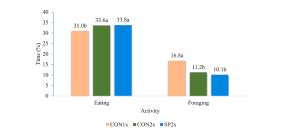
Figure 4: Effect of different feeding strategies and age on percent-of-time behavior (Van Emous and Mens, 2021).
Van Amos and Mance (2021) conducted a three-treatment experiment to investigate the effects of providing a standard diet twice daily or split feeding on broiler parents at 51–60 weeks of age. The study focused on production performance, eggshell quality, hatchability traits, and behavior. The three treatments were as follows:
CON1x: Feeding once daily with the standard parental diet, with 100% of it given at 07:30.
CON2x: Feeding twice daily with the standard parental diet, with 50% of it given at 07:30 and the remaining 50% given at 14:00.
SP2x: Split feeding twice daily, with a specific composition for the morning (07:30) and evening (14:00) diets. The morning diet was similar in energy to the control diet, but had higher protein and phosphorus levels and lower calcium levels. The evening diet, in contrast, had lower energy, protein and phosphorus levels and higher calcium levels than both the control and morning diets.
No significant differences were observed in total egg production or other production parameters. Furthermore, eggshell quality and hatching traits were not affected by the different feeding strategies. However, feeding strategies had a significant effect on behavioral patterns. Feeding twice daily resulted in more time spent eating and sitting and less time spent foraging and pecking than feeding once daily (Figure 4). Therefore, the authors concluded that feeding twice daily improved behavior and egg production while having no significant effect on eggshell quality and hatching traits.
Poodle et al. (2022) conducted a study on broiler parents aged 60–79 weeks to evaluate the effects of different ratios of fine limestone (FL) to coarse limestone (CL) on egg production and quality. The experiment examined two methods of limestone feed distribution: continuous (continuous) or only in the afternoon (separate). A 2 × 4 factorial design was used, which included two feed distribution strategies (continuous and separat- ed ) and four ratios of fine and coarse limestone (35:65, 25:75, 15:85, and 0:100 FL:CL). In total, eight diets were tested. Four diets received the same feed in both the morning and afternoon, while the other four diets received a diet without limestone in the morning but with all limestone in the afternoon. The authors observed that eggshell strength decreased in later stages of laying, leading to an increase in soft and cracked eggs. However, the segregated feeding regimen effectively maintained eggshell strength in later stages of laying (Figure 5). Furthermore, the addition of coarse limestone had a negative effect on the fracture strength of the tibia of hens of more than 75%.
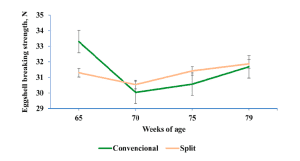
Figure 5. Interaction between feeding strategy and age on mean eggshell fracture strength (in Newtons).
p-value = 0.04; standard error of the mean (SEM) = 0.036.
This p-value indicates a difference between feeding strategies at 65 weeks of age (Poudel et al., 2022).
To assess whether it is beneficial to provide diets that are tailored to the specific nutritional and physiological needs of laying hens at different times of the day (versus a uniform diet throughout the day), Jahan et al. (2024) conducted a study using Highline Brown laying hens aged 34 to 53 weeks. The hens were divided into two groups: Group 1 received a standard laying hen diet continuously throughout the day (control group), while Group 2 received a morning (AM) diet from 8 am to 4 pm and an evening (PM) diet from 4 pm to 8 am the following day (AM/PM). Overall, the findings showed that the AM/PM treatment resulted in a 2.15% increase in egg mass (60.4 vs. 59.1 g/hen/day) and an 8.34% improvement in feed efficiency (2.231 vs. 2.436 kg feed/kg egg) compared to the control group. Eggs from the AM/PM treatment had higher yolk color scores, but there was no significant effect on egg quality. Ileal digestible energy and digestible nitrogen coefficient were lower in the AM/PM-treated hens than in the control treatment (Table 1). However, the AM/PM treatment resulted in a lower feed cost per unit egg mass compared to the control treatment (Figure 6). As a result, the authors concluded that the AM/PM feeding strategy has economic benefits.
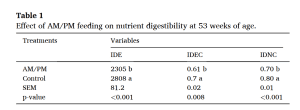
: Ileal digestible energy, IDEC: Ileal digestible energy coefficient, IDNC: Ileal digestible nitrogen coefficient. The letters a,b inside the lines indicate statistically significant differences at the 5% level (Jahan et al., 2024).
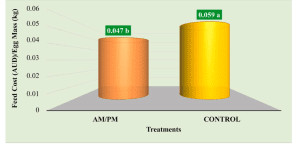
Figure 6. Cost-benefit analysis of dietary treatments over the 20 weeks of this study (Jahan et al., 2024).
In a study by Jahan
(2025), the authors evaluated the effect of split feeding on laying hens by comparing a conventional single-diet feeding regimen with two split feeding strategies (TRT1 and TRT2) that differed in nutrient composition between morning and afternoon. The findings showed that hens in the TRT1 group had a significant reduction in low-grade eggs, improved calcium and phosphorus digestibility, and reduced ammonia (NH₃) emissions. In addition, TRT1 resulted in a 6% reduction in feed costs without any performance loss. Based on these results, the authors concluded that matching nutrient delivery to the physiological needs of hens through split feeding can increase production efficiency while reducing the environmental footprint of egg production.
Conclusion
By implementing split feeding, it is possible to reduce feed costs through precise feeding while improving egg quality. However, the lack of studies on quail production using this method necessitates the need for further research to assess its suitability for this industry. Furthermore, the organization of feed mill logistics is crucial to ensure the successful implementation of this approach on the farm.