Abstract
In this study, in order to investigate the effects of PowerPro Chitica probiotic, ChitaCel Chitica prebiotic and their combination on functional traits, blood parameters and some liver enzymes in trout, 1500 trout fingerlings with an average weight of 6 grams were divided into 4 treatments and 5 replications, and 75 fish were applied in each replication. The experimental treatments included: 1- Control treatment (without additives) 2- Adding 150 grams of PowerPro Chitica probiotic per ton 3- Adding one kilogram of ChitaCel Chitica yeast wall per ton 4- Adding 150 grams of PowerPro Chitica probiotic per ton + adding one kilogram of ChitaCel yeast wall per ton. The results showed that the use of probiotics, prebiotics and synbiotics significantly increased the final weight, fish length at the end of the period, increased the survival rate and specific growth rate compared to the control group, and also significantly decreased the feed conversion ratio compared to the control group. The number of white blood cells decreased significantly in the groups receiving probiotics, prebiotics and synbiotics. The amount of catalase enzyme in the blood increased significantly in the group receiving probiotics, prebiotics and synbiotics. According to the obtained data, it can be reported that the use of probiotics and prebiotics and their combination in the diet at 150 g/ton probiotics and 1 kg/ton synbiotics and their combination has positive effects on the performance of cold water trout fish.
Introduction
Recently, the main concern in aquaculture is to protect the health and welfare of fish, which can be affected by feed and environmental conditions. In recent years, disease prevention has increased significantly and special attention has been paid to the use of feed additives as an alternative to chemical additives. Probiotics, prebiotics and synbiotics are feed additives [1-5]. Probiotics are defined as live microorganisms that, when administered in adequate amounts, confer a health benefit on the host [6,7]. Probiotics have been shown to affect the host by promoting growth, improving survival by reducing pathogenic bacteria and altering the intestinal microflora [5,9,8]. Some of the positive effects of probiotics include enhanced immune responses, competitive adhesion to the food wall and the production of antibacterial substances that together protect the host from disease. Prebiotics are substances of non-microbial origin that are generally not digested or absorbed in the intestine, but provide favorable conditions for the growth and development of a healthy intestinal microbiota [10]. Mannan oligosaccharides (MOSs) are prebiotics that are not digested by mammalian and fish enzymes but are digested by microbial enzymes [11]. Probiotics benefit the host animal by both maximizing feed utilization efficiency (i.e., reducing FCR) and activating immune cells, thus reducing the incidence of various pathogens. Prebiotics can help the animal by modulating beneficial intestinal bacteria and stimulating the secretion of essential digestive enzymes, thus making nutrients more readily available to fish. At the same time, synbiotics improve survival rates and change the microbial composition in the digestive tract, thus helping to improve aquaculture production more effectively than the use of probiotics or prebiotics alone [12]. Synbiotics are the simultaneous use of prebiotics and probiotics, which have a beneficial effect on the host by improving the survival and activity of beneficial microorganisms in the gut. During the application of synbiotics, the main feature of prebiotics is the selective stimulation of the growth of probiotic bacteria. Therefore, a high number of probiotic bacteria colonizes the mucous membranes and prevents the adhesion of pathogens by competing for substrates and penetration sites [13]. Problems caused by pathogenic Aeromonas hydrophila in fish farming are caused by the formation of septicemia in two forms by motile Aeromonas: internal bleeding and induction of acute generalized bacteremia and the appearance of skin ulcers with high mortality [14]. Some authors [15,16] reported that feeding fish with the probiotic bacteria Lactobacillus plantarum and prebiotics (β-glucan and MOS), especially after Aeromonas hydrophila infection, resulted in a better immune response. Several studies have proven the role of probiotics in the control of pathogenic Pseudomonas species. Some available data reported evidence that Bacillus species could be considered as potential probiotics to combat Pseudomonas infections. For example, in one study, bacteriocins synthesized by Bacillus subtilis showed inhibitory activities against Pseudomonas fluorescens [17]. Various commercial products containing various mixtures of probiotic bacteria have been used in aquaculture diets. In one study, BioPlus was tested on rainbow trout and Nile tilapia and showed benefits in growth performance, immune response and resistance to pathogenic bacteria. [18] Similarly, other researchers have shown that BioPlus aids the growth of rainbow trout fry and larvae [19-23]. For this purpose, this study investigated the effects of the probiotic PowerPro Chitica, the yeast cell wall Chitacell Chitica and the combination of these two products (synbiotic) on performance, blood parameters and some liver antioxidant enzymes in trout.
Materials and Methods
This experiment was conducted in a fish farm complex located at the 50th km of the Kalat-Mashhad road. Initially, the breeding tanks were disinfected using potassium permanganate at a rate of 1 mg/liter. The experimental diets were set using the UFFDA diet writing software. For this purpose, 1500 salmon fingerlings with an average weight of 6 grams were divided into 4 treatments and 5 replications, with 75 pieces in each replication. The experimental treatments included: 1- Control treatment (without additives) 2- Addition of 150 grams of Chitika Power Pro probiotics per ton 3- Addition of one kilogram of Chitika Chitacell yeast wall per ton 4- Addition of 150 grams of Chitika Power Pro probiotics per ton + addition of one kilogram of Chitika Chitacell yeast wall per ton. The probiotics and prebiotics used in this experiment were obtained from Chitika Company. The probiotic used in the experiment was obtained from Chitika Company under the brand name PowerPro Chitika and contained 8 bacterial strains (Lactobacillus rhamnosus, Bacillus subtilis, Bacillus lichiniformis, Enterococcus faecium, Pediococcicus acidi lacticus, Lactobacillus casei, Lactobacillus acidophilus and Lactobacillus plantarum) with 1012 bacterial colonies per gram, according to the company’s claim. The yeast cell wall used was also isolated from Saccharomyces cerevisiae yeast. There was an initial 14-day acclimation period and then the cultivation period lasted for 60 days, with 3% of body weight fed 4 times per day. The growth performance and weight and length of the fish (30 fish randomly in each pond) were performed every 15 days.
At the end of the experiment, the fish were anesthetized with clove powder (300 mg/L) and individual biometry of the fish was performed, including length measurement with an accuracy of 0.1 cm and weight measurement with a 0.001 g scale. The following indicators were used to measure performance parameters.
Condition index: The following formula was used to measure the condition index.
100 * (total length in cm / weight (g)) = condition index
The percentage of body weight gain during the entire rearing period was also obtained from the following formula.
100 * (initial weight / (initial weight – final weight)) = percentage of body weight gain
The specific growth rate was also obtained from the following relationship showing daily body weight gain.
Day / (natural logarithm of initial weight – natural logarithm of final weight (g)) = specific growth rate
The feed conversion ratio was also obtained by dividing the amount of feed consumed by the difference between the initial weight and the final weight.
The physicochemical parameters of water are reported in Table 1. After anesthetizing the fish with clove extract, blood was collected from the abdominal veins using heparin syringes to examine the blood parameters. The blood was immediately transferred to the laboratory of Razavi Specialist Hospital for the evaluation of blood parameters.
Statistical analysis: All data were entered into Excel software and sorted. Then, normality was tested using JAMP software and then statistical analysis was performed using SAS-9.3 software using GLM procedure in a completely randomized design. Duncan’s multiple range test was used to compare the means at 0.05 significance level.


Results and Discussion
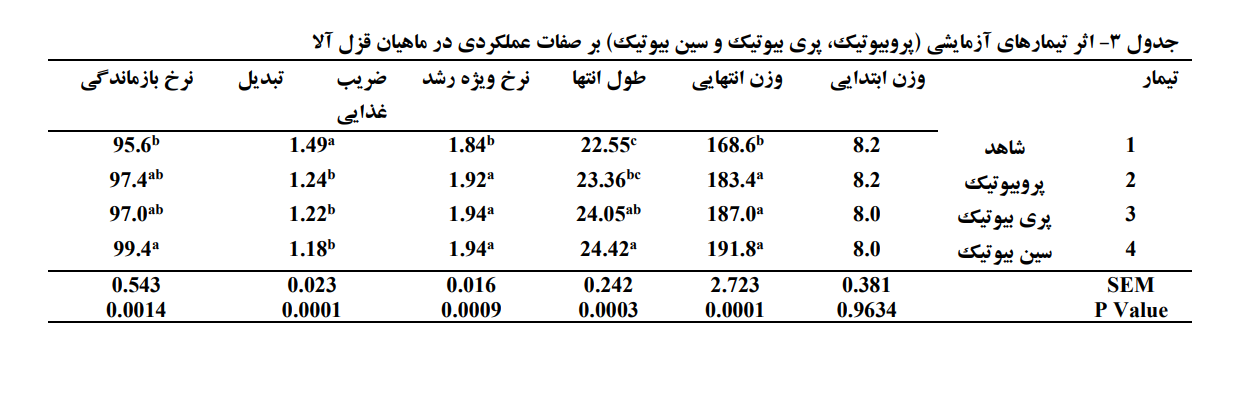
Table 3 reports the effects of experimental treatments (PowerPro Chitica probiotic, Chitacell Chitica and probiotic-prebiotic mixture) on performance traits in coldwater trout. The results showed that the experimental treatments had a significant effect on final weight, fish length at the end of the rearing period, specific growth rate, feed conversion ratio and survival rate. Final weight in probiotic, prebiotic and synbiotic fed groups was significantly higher than in the control group. Fish length at the end of the rearing period in prebiotic and synbiotic fed groups was significantly higher than in the control group. Specific growth rate in probiotic, prebiotic and synbiotic fed groups was significantly higher than in the control group. Feed conversion ratio in the control group was significantly higher than in the other groups. Survival rate in the synbiotic fed group was significantly higher than in the control group. Many studies have shown that probiotics have a positive effect on increasing growth, feed conversion ratio and survival rate in aquatic animals [24,25]. Many studies have reported that probiotics increase the digestibility of nutrients in the intestine by producing bacteriocin and enzymes and also reduce intestinal acidity, leading to increased absorption of minerals [26,27]. On the other hand, probiotics affect the intestine and create dominance in the intestine, reducing the number of pathogens in it and increasing the digestibility of nutrients [28]. In addition, probiotics directly affect the digestibility of nutrients and therefore the feed conversion rate by producing enzymes such as cellulase, phytase, lipase, protease and amylase [29].
The effects of experimental treatments on some blood characteristics of cold water trout are reported in Table 4. The number of white blood cells, hemoglobin and blood albumin were affected by the experimental treatments. The number of white blood cells was significantly lower in the prebiotic and synbiotic fed group compared to the control group. The amount of hemoglobin in the blood of fish receiving PowerPro Chitica probiotic, Chitacell Chitica prebiotic and synbiotic was significantly higher than the control group. The amount of blood albumin in the synbiotic group was significantly higher than the control group. The experimental treatments had no significant effect on the red blood cell count, hematocrit, protein and blood globulin. Considering the positive effects of probiotics and synbiotics on the digestibility of vitamins and minerals and their presence as coenzymes in different cycles, the present effects can be justified. In one study, it was reported that the use of a mixture of two probiotic strains increased the hemoglobin in the blood [6,7]. In another study, it was found that the use of probiotics in the diet of sea bass significantly increased the blood hemoglobin levels [30].
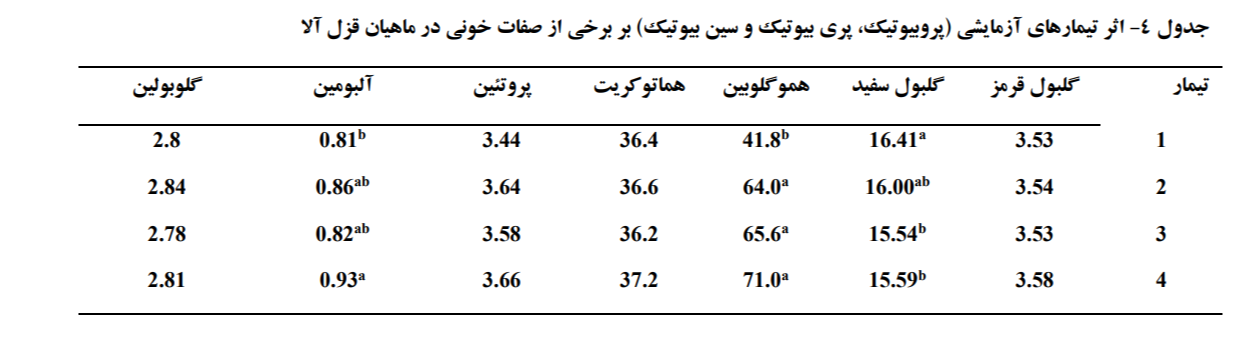
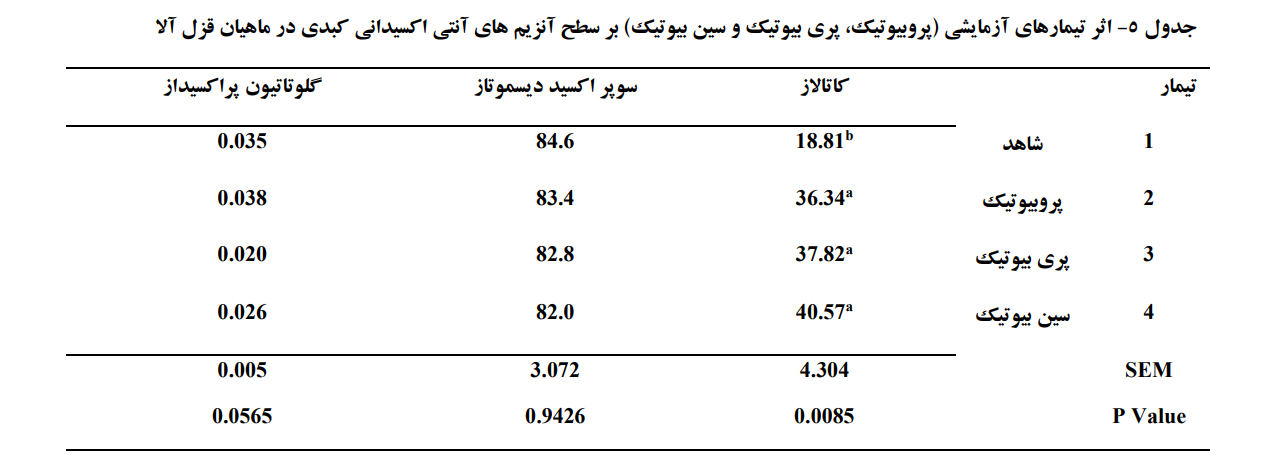
Table 5 reports the effects of probiotic PowerPro Chitica, prebiotic Chitica and their combination on liver antioxidant enzyme levels in cold water rainbow trout. The catalase enzyme levels in the blood serum were significantly higher in the groups receiving probiotic, prebiotic and synbiotic than in the control group. The levels of superoxide dismutase and glutathione peroxidase were not affected by the experimental treatments. The antioxidant defense capacity of the body is directly related to body health. The use of probiotics increases the antioxidant activity in the fish body. In a recent study, the use of probiotic Lactobacillus plantarum in the diet of Nile tilapia fish increased the level of antioxidant enzyme activities such as catalase, superoxide dismutase and glutathione peroxidase [28]. In a study conducted by Mozanzadeh et al. in 2023, they investigated the effect of probiotic mixtures on the antioxidant capacity of South Asian sea bass and reported that the addition of probiotics to the diet increased the enzymatic activity of catalase and superoxide dismutase in blood serum [30].
Conclusion
The use of probiotics in aquatic nutrition has positive effects on aquatic performance due to the existence of a competitive elimination mechanism with pathogens. In this study, the use of probiotic PowerPro Chitica, prebiotic Chitacell Chitica and synbiotic significantly increased the final weight, length of fish at the end of the period, increased survival rate and specific growth rate compared to the control group and also significantly decreased the feed conversion rate compared to the control group. The number of white blood cells decreased significantly in the groups receiving probiotics, prebiotics and synbiotics. The amount of catalase enzyme in the blood increased significantly in the group receiving probiotics, prebiotics and synbiotics. According to the obtained data, it can be reported that the use of probiotics and prebiotics and their combinations in the diet at concentrations of 150 grams of probiotics per ton and one kilogram of synbiotics per ton have positive effects on the performance of cold water trout fish.