Abstract:
This experiment was conducted to investigate the effects of different levels of a multicomponent toxin binder (Bentomax Plus) on performance, milk production, composition, and aflatoxin M1 content in the milk of Holstein dairy cows. For this purpose, 16 Holstein dairy cows were used in 4 treatments with 4 replications in a completely randomized design. The experimental treatments included a control treatment (0% Bentomax Plus) and three different levels of Bentomax Plus including 0.5, 1, and 2 kg per ton of diet. All fully mixed diets were fed individually to the animals to their appetite (ad libitum) and the cows were milked twice a day. Milk sampling was performed weekly. Raw milk production was corrected based on a factor of 3.5% milk fat and milk composition was examined. The results showed that dry matter intake, milk production, fat and lactose in milk were not affected by different levels of Bentomax Plus (p<0.05), but their amounts increased with increasing levels of Bentomax Plus. Milk protein percentage was affected by treatments (p<0.05) and with increasing Bentomax Plus, protein percentage also increased. The percentage of aflatoxin M1 transfer to milk in the control treatment was higher than in the treatments containing Bentomax Plus, such that Bentomax Plus was able to significantly prevent the transfer of aflatoxin into milk (p<0.05). The results of the present study showed that adding Bentomax Plus to the diet of dairy cows, in addition to improving the performance of the animals, can prevent the entry of aflatoxins into milk.
Introduction:
Mycotoxins are secondary metabolites of fungi (Reddy et al., 2010) that have diverse structural compounds that differ in terms of chemical and biological effects (Sorakin et al., 2003). Several years of worldwide studies on mycotoxins have shown that all animal feeds, including concentrates, forages and silages, contain at least 1% of mycotoxins (Rodriguez and Nahrer, 2012).
Among the various mycotoxins, aflatoxins, ochratoxins, T2, zearalenone and deoxynovalenol are present in most foods in different parts of the world. The most toxic effect of mycotoxins is damage to body organs, which will cause reduced feed intake, poor conversion rate, reduced production, fertility and reproductive problems. A scientific and cost-effective solution to reduce toxic effects and their transfer into livestock products is to reduce their bioavailability in the digestive tract. Queiroz et al. (2012) reported that bentonite-based adsorbents are effective in adsorbing toxins. Fermented products of Saccharomyces cerevisiae (SCFA) also have the ability to improve animal performance by modulating the gut microbiome, improving gut morphology, and reducing inflammatory responses (Xiao et al., 2016). In an analysis of data from 36 studies, SCFA supplementation was shown to increase DMI, milk production, and milk fat and protein percentage in lactating cows (Popey et al., 2012). Therefore, yeast cell wall and bentonite combinations may reduce the transfer of dietary aflatoxin into cows’ milk and prevent the reduction of milk production by toxins. Recently, Okanda et al. (2016) reported that a combination of sodium bentonite and SCFA improved performance and reduced metabolic stress in dairy cows. The aim of this study was to investigate the effects of different levels of a multicomponent toxin binder (Bentomax Plus) on performance, milk production, composition, and aflatoxin M1 concentration in milk of Holstein dairy cows.
Materials and Methods:
This experiment was conducted at a private dairy farm located on Tabadkan-Golbahar Road in Mashhad. Sixteen Holstein lactating cows in their third calving (4 dietary treatments and 4 replicates per treatment) with an average weight of 632 ± 45 kg and an average calving time of 70 ± 18 days were grouped in a completely randomized design. A 21-day experimental period was considered for the treatments, with a two-week acclimation period and seven days of sampling. The experimental treatments included: 1) Control (fully mixed diet contaminated with aflatoxin without the addition of Bentomax Plus) 2) Control + 500 g Bentomax Plus per ton of feed 3) Control + 1 kg Bentomax Plus per ton of feed 4) Control + 2 kg Bentomax Plus per ton of feed. This product was prepared in powder form under the trade name Bentomax Plus from Chitika Binder Company. The feed ingredients and chemical composition of the diet are shown in (Table 1). The basal diet was adjusted based on the requirements of dairy cows producing 35 kg milk per day according to the NRC 2001 nutritional requirements. Milk production was recorded daily. Milk samples were taken from days 15 to 21 of the experimental period for milk fat, protein and lactose concentrations and milk somatic cell count using a spectrophotometer. Milk samples were stored at -20°C until they were transported to the laboratory for AFB1 and AFM1 analysis and measured by high-performance liquid chromatography (HPLC) as described by Kotz et al. (2009).
Equations and statistical analysis of data
The data obtained were analyzed in a completely randomized design. The GLM procedure of SAS statistical software version 9.1 (2001) was used to analyze the data. Duncan’s multiple range test was used to compare means at a significance level of 0.05.
The statistical model of this design is as follows:
Yij = µ + Ti + eij
Yij = value of each observation in treatment i in replication j, µ = population mean for the trait of interest, Ti = effect of treatment i, eij = residual effects (experimental error)
Table 1 – Feed ingredients and chemical composition of experimental diets
|
Diet components |
Dry matter percentage |
|
Dry hay |
15 |
|
Corn silage |
25 |
|
Sugar beet pulp |
3 |
|
Ground corn |
13/5 |
|
Milled barley |
17/5 |
|
Soybean meal |
13 |
|
Cottonseed meal |
6 |
|
Wheat bran |
4/5 |
|
Fish powder |
1 |
|
Calcium carbonate |
0/7 |
|
Sodium bicarbonate |
0/4 |
|
Dicalcium phosphate |
0/1 |
|
Salt |
0/3 |
|
Mineral-vitamin supplement |
0/5 |
|
Chemical composition of the diet |
|
|
Crude protein (percentage) |
18 |
|
Neutral detergent insoluble fibers (percentage) |
31 |
|
Acid detergent insoluble fibers (percentage) |
18/8 |
|
Net lactation energy (megacalories per kilogram of dry matter) |
1/59 |
Results and Discussion
The results of the effects of using different levels of Bentomax Plus in diets contaminated with aflatoxin toxins on dry matter intake, milk production, fat, protein and lactose in milk, and milk somatic cell count in Holstein lactating cows are shown in Table 2. The results showed that the use of Bentomax Plus did not affect dry matter intake (p<0.05), but with increasing its numerical value, dry matter intake increased. These results are consistent with the data of previous studies (Uganda et al., 2016; Maki et al., 2016). Milk production and corrected milk production were not affected by the increase in the amount of Bentomax Plus (p<0.05), but with the increase in the numerical amount of Bentomax Plus, milk production also increased. This improvement in milk production in the treatments consuming Bentomax Plus compared to the control treatment could be due to the presence of yeast cell walls, which improve rumen fermentation, dietary dry matter digestibility, and prevent the negative effects of aflatoxin B1. For example, the addition of aflatoxin B1 reduces rumen microbial fermentation in vitro due to the reduction in cellulose degradability, volatile fatty acids, and dry matter digestibility (Jiang et al., 2012). The yeast cell wall present in Bentomax Plus in the present study may reduce the negative effects of aflatoxin B1 on rumen fermentation by providing a combination of micronutrients that stimulate the growth of rumen bacteria, thereby facilitating rumen fermentation and increasing the performance of dairy cows (Patra, 2012).
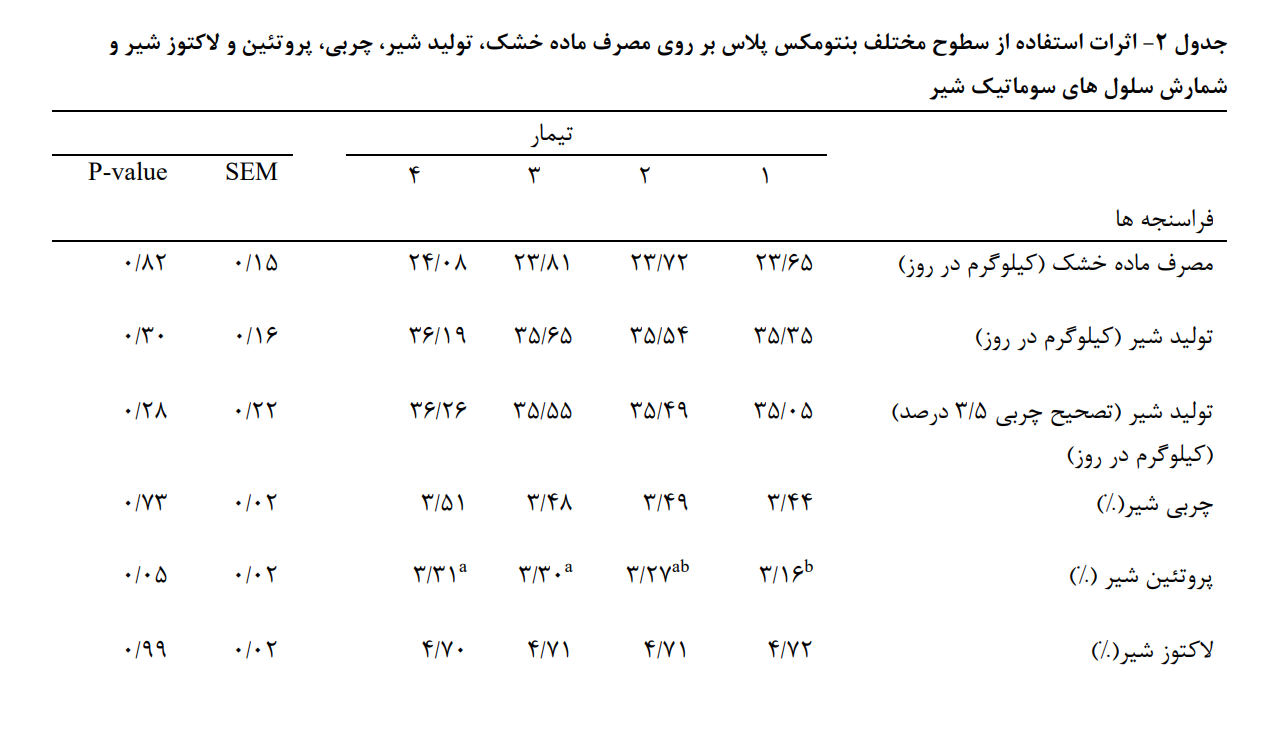
Several previous studies have shown that yeast cell wall can improve rumen fermentation and animal performance under stressful conditions that can affect it, such as heat stress in lactating dairy cows or metabolic stresses during the transition period of dairy cows (Acharya et al., 2017). Milk protein percentage was higher in cows receiving Bentomax Plus compared to the control group (p<0.05), which was consistent with the results of Jiang et al. (2018). They reported that the addition of yeast cell wall along with sodium bentonite to the diet of dairy cows challenged with aflatoxin B1 significantly increased milk protein production. Milk fat and lactose percentage were not affected by the addition of Bentomax Plus in cows fed a fully mixed diet containing aflatoxin. These results were consistent with a previous finding. Kotz et al. (2009) reported that adding 112 μg aflatoxin per kg of dry matter to the diet had no effect on the concentration of milk components in dairy cows. Jiang et al. (2018) also reported that adding yeast cell wall with sodium bentonite had no effect on the percentage of fat and lactose in milk in cows challenged with aflatoxin B1.
Aflatoxin B1 in feed
The average AFB1 content in contaminated cottonseed meal was 304 μg kg in the diet of dairy cows. According to the feed intake of each treatment group, treatment 1) received 304.52, 2) 305.34, 3) 306.03 and 4) 310.03 μg aflatoxin B1 per day.
Aflatoxin intake and the effects of Bentomax Plus on the rate of aflatoxin M1 transfer into milk
Aflatoxin is rapidly transferred into milk as aflatoxin M1, this metabolite is isolated in milk after the first milking in which the animal has received aflatoxin B1 (Masuerova et al., 2007). Based on this information and since the main objective of this study was to determine the effect of adding Bentomax Plus to the diets to reduce the rate of aflatoxin B1 transfer into the milk of lactating cows, milk sampling was carried out for 7 days for this purpose. The results obtained are shown in Table 3, which indicate that the presence of aflatoxin in the cows’ diets negatively affects the quality of milk in relation to the content of aflatoxin M1 and leads to an increase in toxic metabolites in milk.
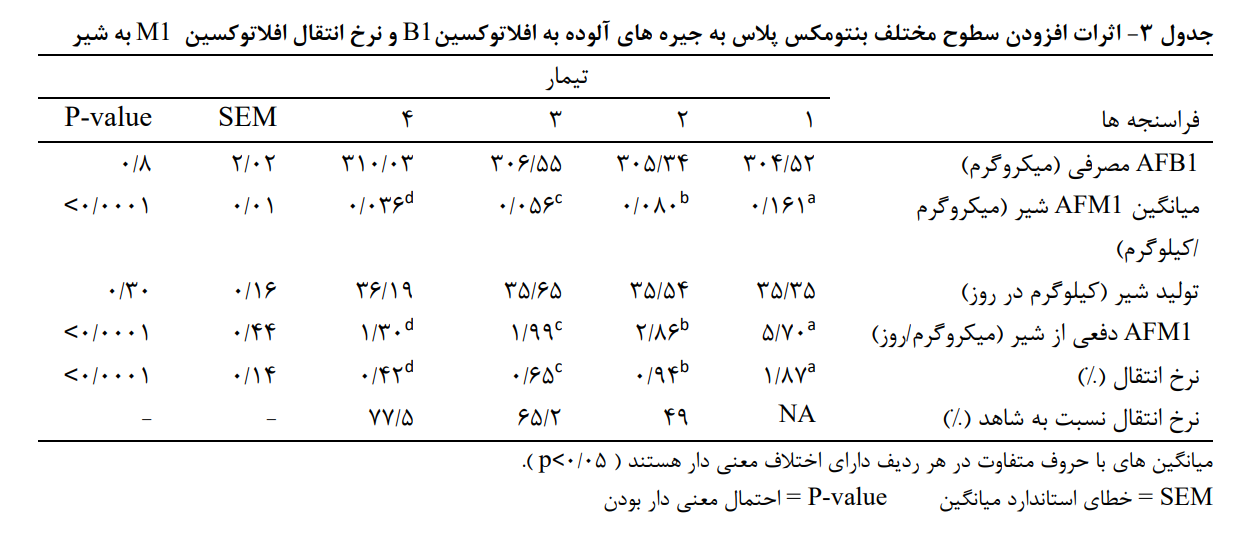
The addition of Bentomax Plus significantly reduced the aflatoxin M1 content from 0.161 μg/kg to 0.080 (treatment 2 = -49%), 0.056 (treatment 3 = -65.2%) and 0.036 (treatment 4 = -77.5%) μg/kg. The addition of different levels of Bentomax Plus to aflatoxin contaminated diets had metabolic effects and significantly (P > 0.0001) reduced the aflatoxin M1 concentration in groups 2, 3 and 4 compared to group 1 (control), indicating the effectiveness of this product in reducing the transfer of aflatoxin from feed to milk. Previous studies have shown that a high dose of montmorillonite (1% of dry matter intake) reduces aflatoxin M1 concentration below the FDA threshold (Quiroz et al., 2012). Kissel et al. (2013) observed a 60.4% reduction in milk aflatoxin M1 concentration in dairy cows fed 91 μg/kg aflatoxin B1. In addition, Maki et al. (2016) observed a 55-68% reduction in milk aflatoxin M1 concentration when 0.5-1% calcium montmorillonite was added to dairy cows’ diets containing 121 μg/kg aflatoxin B1.
Conclusion
Addition of Bentomax Plus multicomponent toxin binder to diets with high aflatoxin contamination reduces the transfer of aflatoxin into milk by 70-80%, and the presence of yeast cell walls in this product improves mycotoxin absorption and animal performance.