Abstract
Adding antibiotics to livestock diets increases growth, reduces feed conversion, improves production and reproductive performance. However, long-term use of antibiotics in feed increases antibiotic resistance in livestock and humans. Using yeast as an alternative to antibiotics in ruminant nutrition establishes and maintains a balance of beneficial bacteria populations, increases fiber digestion, improves rumen function, and regulates rumen acidity. In this experiment, the effect of using Saccharomyces cerevisiae yeast on milk production and its components, some blood parameters, and fatty acid profile composition in dairy cows was evaluated. Treatments included a control treatment (without yeast) and a treatment containing 1 kg/ton of Saccharomyces cerevisiae yeast. The results showed that adding yeast to the diet increased milk fat and milk production numerically, but the difference was not significant. Also, the number of somatic cells in the milk of cows fed with yeast was significantly reduced compared to the control group. The blood triglycerides in the control group were 13.02, which was significantly higher than the yeast-fed group (11.77). The yeast Saccharomyces cerevisiae used in this study did not have a significant effect on the fatty acid profile compared to the control group. Overall, the results showed that yeast supplementation can have a significant effect on reducing milk somatic cell count and reducing blood triglycerides, two very important parameters in cattle health and economics, since the price of milk increases with the decrease in somatic cell count.
Introduction
In connection with the rapid growth of the human population, there has been a corresponding increase in the demand for livestock products in developing countries, which may double by 2030 (1). This has led to the intensification of livestock production worldwide, which necessitates the use of high-grain diets to enhance livestock production (2). However, the use of high-grain diets to improve livestock performance predisposes animals to increased metabolic disorders such as acidosis. Thus, the use of feed additives that improve rumen health when feeding high-grain diets is essential (3). Meat with a high saturated fatty acid composition has been linked to cardiovascular disease and cancer. This has challenged animal nutritionists to find ways to modify the fatty acid content of meat to increase its acceptability (4,5,6). Yeast is a probiotic commonly used in ruminant nutrition and has been shown to be effective in restoring the intestinal microbial balance, especially during digestive disorders (7). It is widely used in ruminant production to increase feed efficiency and prevent rumen acidosis through its fermentation activities, by competing with other microbes in the rumen (8). Yeast-containing diets also improve milk production performance, lactation continuity, and milk quality. Yeasts can compete for nutrients, produce antimicrobial compounds, neutralize toxins produced by microorganisms, and reduce the incidence of intestinal infections and inflammation. Although researchers have been investigating the efficacy of yeast in the diet of ruminants for decades, there are still many research gaps that need to be filled. Many published articles on yeast have reported conflicting results, and their mechanism of action is not fully understood. With the current global crusade against the use of antibiotics in animal feed, the use of yeast in improving fermentation performance and rumen growth has received renewed attention. However, the effect of yeast in improving meat and milk quality, especially the fatty acid profile and conjugated linoleic acid (CLA) composition, has been overlooked. Since yeast is able to alter rumen fermentation, it can affect rumen hydrogenation, which in turn can affect fatty acid deposition in animal products. Therefore, this study aimed to investigate the effects of using Saccharomyces cerevisiae yeast on milk composition, its aflatoxin M1 content, and fatty acid profile.
Materials and Methods
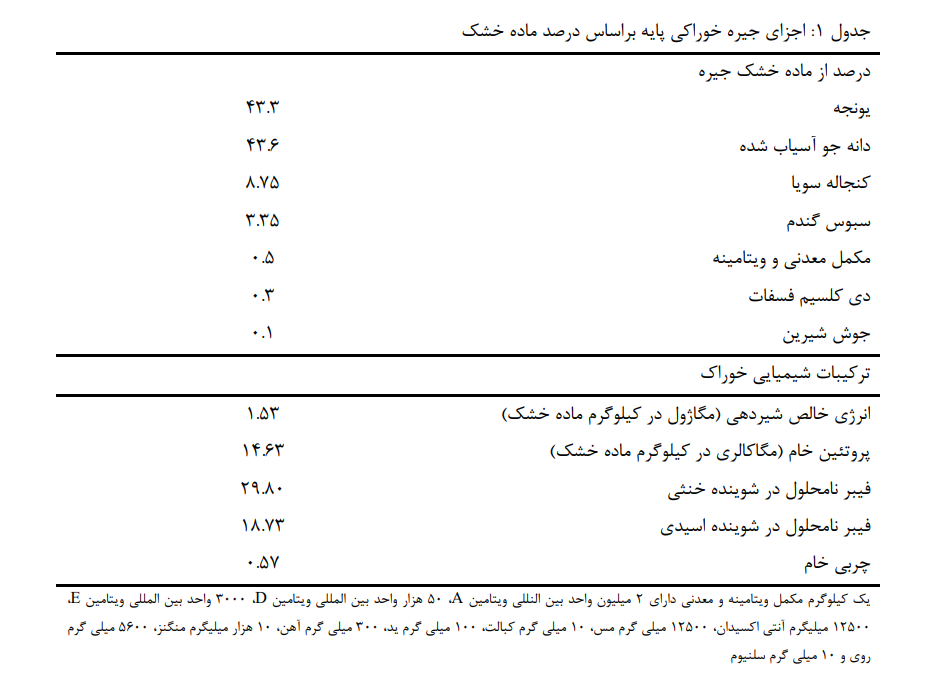
This experiment was conducted in a dairy farm near Mashhad. The yeast used in this experiment has a cfu/gr of 6.7*109 Saccharomyces cerevisiae, which was obtained from Chitika Company under the brand name Chitacell. In this experiment, 18 Holstein dairy cows with two calving bellies were used in two groups of 9 in two 21-day periods. The average milk production was 33.68±2.1 and all cows were similar in terms of weight and calving bellies. The first group was the control group and the second group received 1 kg/ton of commercial Chitacell yeast feed. After 21 days of the first period, the cows received control feed for 20 days and then the experimental treatments were switched, that is, the cows receiving the control diet received a yeast-containing diet on the second 21 days and the cows receiving yeast on the first 21 days received the control diet on the second 21 days. The basal diet was adjusted based on the NRC (9) nutritional requirements, as shown in Table 1. Cows were provided with a complete mixture in the required amount every day at 8 am, 12 noon and 4 pm and had free access to water. Cows were milked three times a day at 9 am, 5 pm and 1 am. The amount of milk produced was recorded on days 7, 14 and 21. In order to measure the milk composition on days 7, 14 and 21, 50 ml of milk was separated from each cow separately in the morning milking and its composition was measured using a MilkoScan device and the number of somatic cells was determined using a Somatoz device and its standards. To measure blood parameters, cows were sampled three hours after feeding at the end of each period, and serum samples were separated using a centrifuge (3000 rpm for 10 minutes), and the separated sera were stored at -20°C until the day of analysis. The fatty acid composition of milk was determined using gas chromatography according to the Fritsch and Steinhart method (10). Milk samples from each cow were collected in numbered falcons, and milk fat was separated and the fatty acid profile of the fat samples was analyzed. A high-performance chromatography (HPLC 1525 Breeze W) and immunoaffinity columns were used to measure the concentration of aflatoxins in feed and milk. Glucose, total protein, blood urea nitrogen, and triglycerides were measured using Pars Azmoun kits and an autoanalyzer.
Statistical analysis: All data were entered into Excel software and sorted. Then, normality was tested using JAMP software, and then, using SAS-9.3 software, the GLM procedure was statistically analyzed in a completely randomized design. Duncan’s multiple range test was used to compare the means at a significance level of 0.05.
Results:
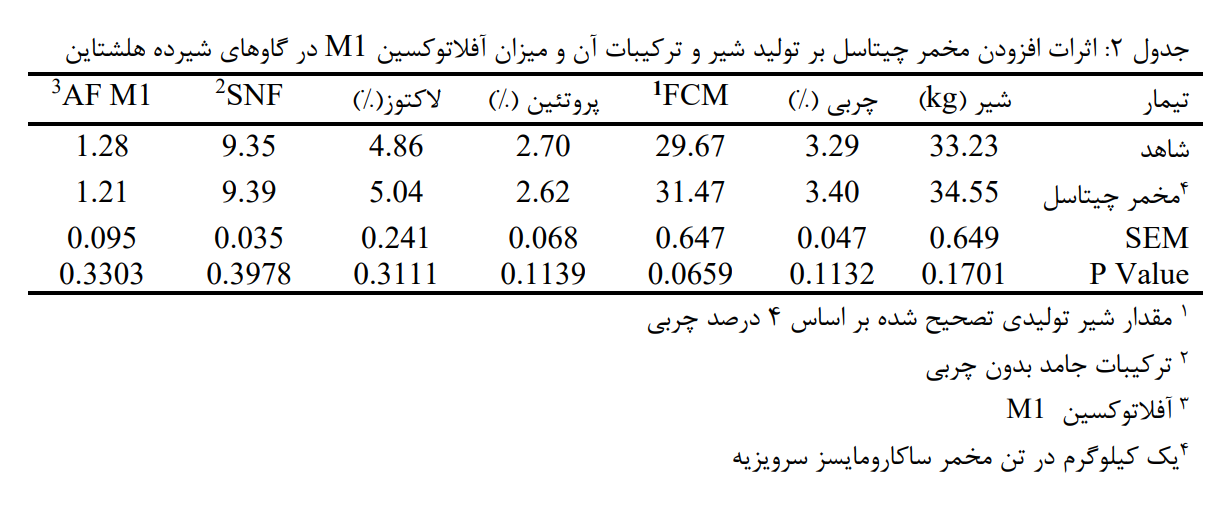
Table 2 reports the effects of using Saccharomyces cerevisiae yeast on milk production, its components and the amount of aflatoxin M1 in Holstein cows. The results showed that using 1 kg per ton of yeast in the diet did not have a significant effect on milk production and its components. The amount of aflatoxin in milk, although numerically close to significance and decreased, was not statistically significant. Considering that the amount of milk fat was 3.29 and 3.40 in the control group and the group fed with Chitacel yeast, respectively. But the difference was not significant. The amount of milk produced, corrected based on 4% milk fat, was approximately 2 kg more in the group fed with yeast than in the control group and was close to significance (P<0.066).
The effects of the addition of Saccharomyces cerevisiae yeast on milk somatic cells and serum parameters are reported in Table 3. Somatic cells in milk were significantly reduced (P<0.05). The number of somatic cells was approximately 16,000 higher in the control group than in the group fed with Chitacell yeast. Glucose, total protein and urea nitrogen were not affected by the experimental treatment. Serum triglycerides were significantly reduced in the group fed a diet containing 1 kg/t of Chitacell yeast (P<0.05).
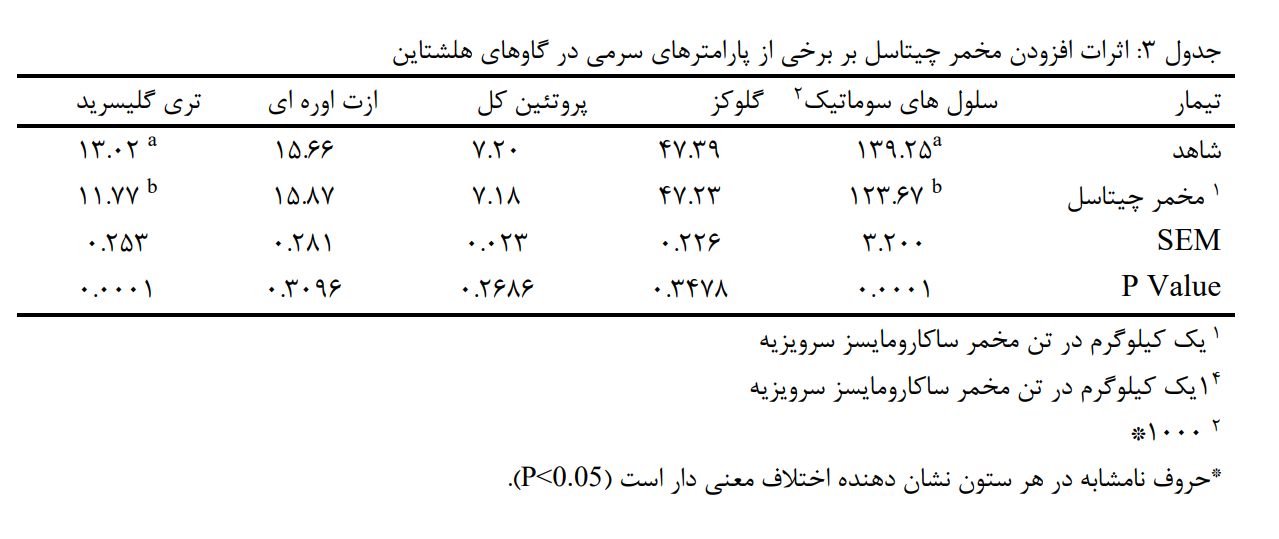
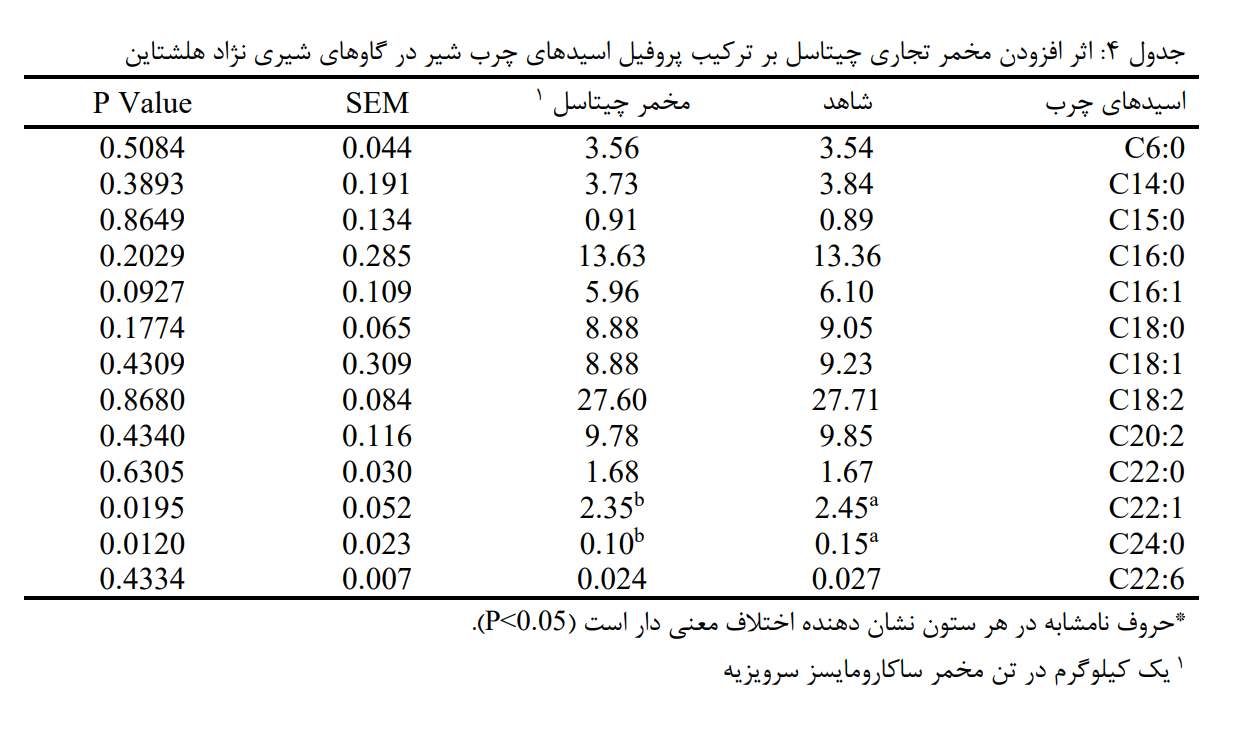
Table 4 compares the effect of commercial yeast Chitacell with the control group on the fatty acid profile of milk. The results showed that the fatty acid profile was not affected by the experimental treatment. The amount of behenic acid (C24:0) and lignoceric acid (C22:1) increased significantly under the influence of yeast consumption in milk.
Discussion
The results showed that adding 1 kg of yeast per ton of feed had no significant effect on milk production compared to the control diet. Many studies were consistent with the results of the present study and reported that yeast could not have a significant effect on the amount of milk produced (11, 12 and 13). On the other hand, in a study conducted by Lister et al. (14) they showed that daily consumption of 10 g of Saccharomyces yeast increased milk production. Although there are different reports from researchers in this regard, the effects of additives will be much clearer under stress conditions (15). In this study, as reported in Table 2, the use of yeast could not have a significant effect on milk components. In previous studies, it has been reported that the use of yeast could not have an effect on milk lactose (16, 17 and 18). In contrast, one study stated that the consumption of 10 g of yeast per day increased lactose in milk. While 14 g/day had no significant effect (14). Adding yeast to the diet significantly reduced the number of somatic cells in milk. A decrease in the number of somatic cells in milk is an indicator of breast health and milk production. In a study conducted by Yuino et al. (19), they reported that the use of yeast could not have an effect on the reduction of somatic cells. The amount of behenic acid (C24:0) and lignoceric acid (C22:1) increased significantly under the influence of yeast consumption in milk. However, other fatty acids in milk were not affected by yeast treatment. Many studies have investigated the effect of yeast wall and live yeast on the composition of fatty acids and it has been reported that the use of yeast in the diet does not have a significant effect on the composition of fatty acids (12 and 17).